
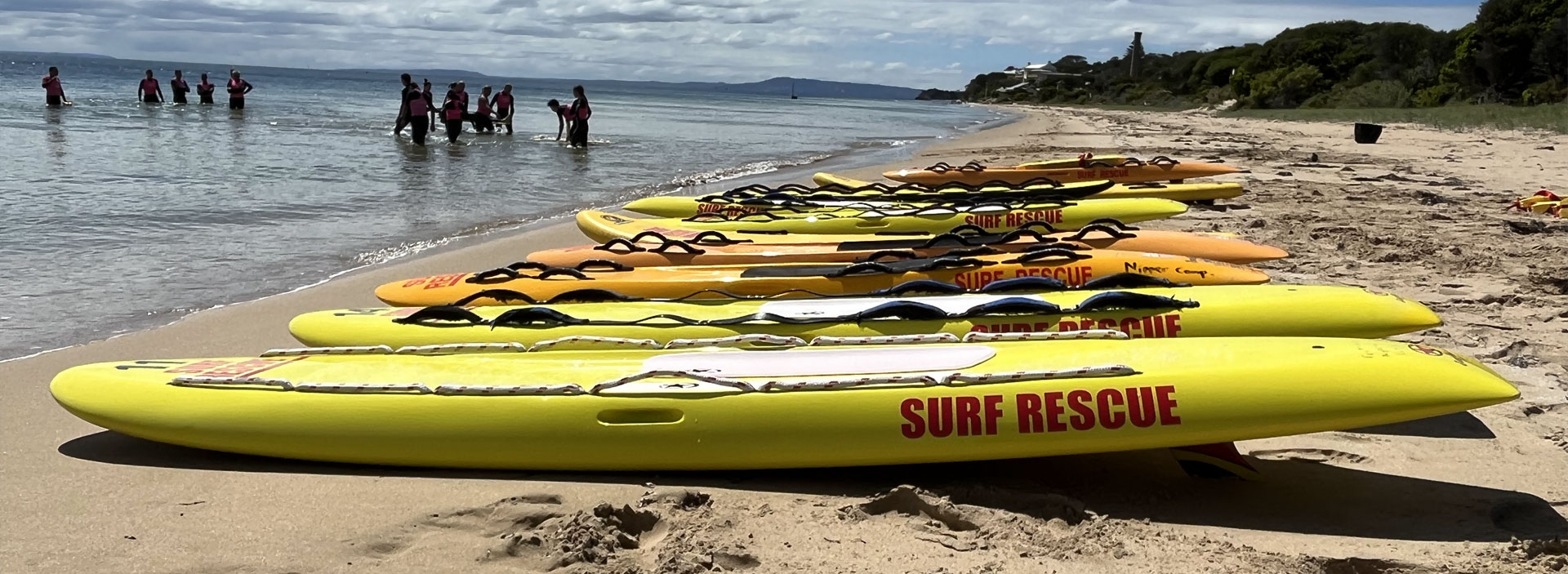
Part-Time Bronze gives you the same training as Bronze Camp, just spread out over several weeks instead of six straight days. It’s designed for people who can’t commit to a live-in camp: Nipper parents, older teenagers, adults discovering surf lifesaving for the first time, and patrollers returning after time away.
The content is identical to Bronze Camp. By the end, you’ll hold the same Bronze Medallion and be ready to patrol as an active member at Portsea’s back beach.
PROGRAM DATES
PART-TIME BRONZE CAMP 2026 RUNS:
- 14th November 2026 – St Kilda LSC (9am-5pm)
- 21st November 2026 – Portsea SLSC (9am-5pm)
- 5th December 2026 – Patrol Day Portsea SLSC (9am-2pm) (This date is negotiable with prior approval)
There will also be a “work from home” day scheduled for candidates to complete the online learning modules.
REGISTRATION DATES AND PROCESS
Part Time Bronze Registration Opens:
Tuesday 8th of September 2026 at 12pm AEST
Registration / Waitlists will CLOSE on:
Tuesday 15th September 2026 at 12pm AEST
Registration links are posted to members via the e-Boomer. If the program is oversubscribed, you’ll be added to a waitlist and contacted if a place opens up.
ELIGIBILITY
To take part in Part-Time Bronze, you must:
- Be a current financial member of Portsea SLSC
- Be at least 16 years of age as of November 1st, 2026
- Swim 400m in under 9 minutes in a pool of at least 25m (an open water fitness test is completed on the practical day instead of a pre-course accreditation swim)
- Complete all e-learning modules before your final assessment day
FEES
The cost for Part Time Bronze is $150 per candidate.
ENQUIRIES
For anything Part-Time Bronze related, contact the Education Subcommittee: education@portseasurf.com.au
WHAT YOU’LL LEARN
Part-Time Bronze covers exactly the same skills as Bronze Camp. By the end, you’ll be able to:
- Read surf conditions and apply that awareness on the beach
- Use surf skills to navigate the surf effectively
- Perform basic surf rescues with a range of techniques and equipment
- Take part in patrol operations, including emergencies
- Provide basic emergency care and life support, including CPR and AED use
- Apply basic first aid principles
- Use SLSA approved radios and communication methods
- Apply spinal management techniques
- Work as part of a lifesaving team